


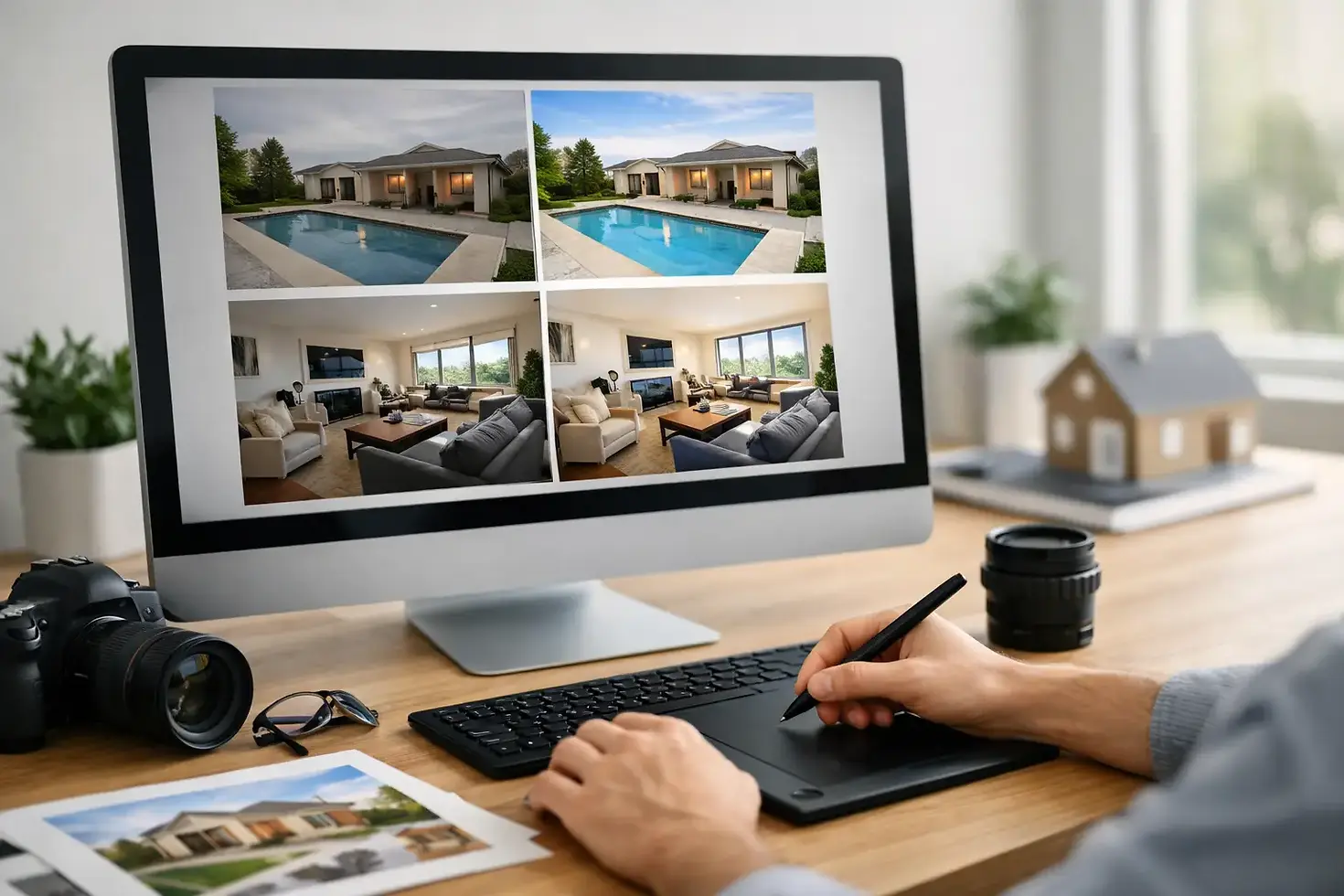
Photo Retouching for Real Estate That Sells
A bright room can look flat in a raw file. A beautiful view can disappear behind a blown-out window. Even a thoughtfully designed home can feel less inviting when the colors are dull, vertical lines lean, or a few small distractions pull attention away from the space. Photo retouching for real estate is the finishing work that turns a well-captured image into a polished marketing asset - while keeping the property honest, recognizable, and ready for its next viewing.
For agents, sellers, landlords, builders, and short-term-rental hosts, listing photos are often the first showing. Before someone schedules a tour or books a stay, they are deciding whether the property feels cared for, spacious, bright, and worth their time. Retouching helps each image communicate those qualities with greater precision.
What Real Estate Photo Retouching Actually Does
Professional retouching is not about making a property look like something it is not. It is about presenting what is already there at its best. The goal is a clean, balanced image that reflects how the home feels when a visitor walks through it on a well-lit day.
A careful edit begins with exposure. Interior rooms and exterior views rarely fall within the same range of light, especially when windows are visible. Retouching can balance those areas so viewers can see both the room and the landscape, city view, pool, or backyard beyond the glass. This matters because a white, featureless window can make an otherwise strong room feel unfinished.
Color correction is equally important. Mixed lighting is common in homes: daylight from windows, warm bulbs in lamps, recessed lights, and under-cabinet fixtures may all appear in one frame. Without thoughtful correction, walls can turn yellow, gray floors can look blue, and white cabinetry can look inconsistent. A refined edit restores a natural color balance so finishes appear clean and intentional.
Retouching also corrects visual details that distract from the architecture. Minor sensor spots, small scuffs, temporary cords, crooked blinds, or an unflattering reflection can pull a viewer out of the image. Removing or minimizing these elements lets the buyer focus on the room's proportions, light, materials, and flow.
Why Polished Images Create More Interest
A property listing competes with dozens, sometimes hundreds, of other listings on a buyer's screen. The photos do not need to be overly dramatic to stand out. They need to feel clear, attractive, and credible at a glance.
When lighting is balanced and composition is supported by clean editing, rooms feel more open and easier to understand. Buyers can quickly see the kitchen layout, the size of the living area, the condition of finishes, and the relationship between indoor and outdoor spaces. That clarity encourages the next action: opening the listing, saving it, sharing it, or booking a showing.
For rental hosts, the same principle affects booking interest. Guests want to know what they are getting. Well-retouched images can make a room feel calm and welcoming while still showing practical details such as workspace, storage, amenities, and natural light. The result is not simply a prettier gallery. It is a gallery that gives guests more confidence in the stay.
There is also a perceived-value benefit. A carefully photographed and finished listing signals attention to detail. Viewers may reasonably expect a property presented with care to be well maintained, thoughtfully managed, or professionally represented. Images cannot change the condition of a home, but they can ensure its strongest features receive the attention they deserve.
The Best Retouching Is Accurate, Not Overdone
There is a clear difference between enhancement and misrepresentation. Brightening a dark corner, correcting an orange color cast, or replacing a dull sky with a realistic one can improve an image while staying true to the property. Altering permanent defects, expanding room dimensions, hiding major nearby features, or changing the home’s condition crosses a line.
This balance matters legally, ethically, and commercially. A listing that looks dramatically different in person creates disappointment at showings and can damage trust with potential buyers or guests. The strongest real estate imagery creates excitement before the visit, then makes the property feel familiar when the door opens.
Natural editing also holds up better over time. Excessive saturation, ultra-bright interiors, and aggressively darkened skies can make an image look dated or artificial. A more restrained approach keeps whites clean, colors believable, shadows open enough to show detail, and highlights controlled without looking flat.
Common Adjustments That Keep Images Honest
Most high-quality real estate edits rely on a series of subtle corrections rather than one dramatic effect. Perspective correction keeps walls and door frames vertical, which is especially valuable in wide-angle interior photography. Exposure blending helps windows and rooms coexist naturally. Lens corrections reduce distortion at the edges of the frame.
An editor may also refine the lawn, straighten exterior lines, remove small temporary items, reduce glare, and bring back detail in bright surfaces. These changes support the image without inventing a different property. The best retouching is often invisible because viewers simply experience a space that looks bright, orderly, and true to life.
Retouching Starts Before the Camera Comes Out
Editing can solve many small issues, but it cannot replace preparation. A styled, tidy room photographs better, requires less correction, and feels more authentic in the final gallery. Before a shoot, clear counters where possible, remove personal clutter, hide bins and pet items, straighten chairs, open blinds for attractive views, and replace burned-out bulbs.
This is not about making a home feel sterile. A few intentional details can create warmth: neatly folded towels, a simple table setting, fresh pillows, or a well-made bed. The key is to make each room feel purposeful. Every item in the frame should either help show the space or quietly support its atmosphere.
Timing also matters. Daylight changes quickly, and the best time for an exterior depends on the property’s orientation, landscaping, and surroundings. A professionally planned shoot considers sun direction, window light, and whether twilight imagery would add value. Retouching works best when the original capture has strong composition, considered lighting, and accurate exposure to build from.
When Advanced Editing Is Worth Considering
Not every property needs the same level of post-production. A clean, vacant condo with even light may only need color, exposure, and perspective corrections. A luxury home with large windows, layered lighting, architectural details, and premium finishes may benefit from more involved blending and detailed finishing.
Virtual enhancements can also be useful in the right context. Virtual staging may help an empty room communicate scale and purpose. Virtual dusk can add warmth to an exterior image when a true twilight shoot is not practical. These tools should be used carefully and disclosed when appropriate, particularly when furniture, finishes, or views have been digitally changed.
The decision comes down to the property, the market, and the story the listing needs to tell. A family home may need to emphasize flow and usable living space. A vacation rental may benefit from highlighting outdoor amenities and evening ambiance. A newly built property may need crisp images that reveal materials, craftsmanship, and architectural lines.
A Better Standard for Listing Photography
Great real estate photography is a combination of preparation, perspective, lighting, and finishing. Retouching is where those choices are brought into balance. It protects bright windows from disappearing, keeps color believable, corrects visual distractions, and gives every image a consistent level of care.
At Everywhere Studio, the aim is not to create a version of a property that cannot be experienced in person. It is to produce clean, aesthetically refined images that make its best features easy to see and easy to remember.
Before your next listing goes live, look at the photos the way a buyer or guest will: quickly, on a screen, with many other options nearby. If the rooms feel dark, crooked, cluttered, or inconsistent, a thoughtful retouching process can help the property make the stronger first impression it already deserves.
Comments