


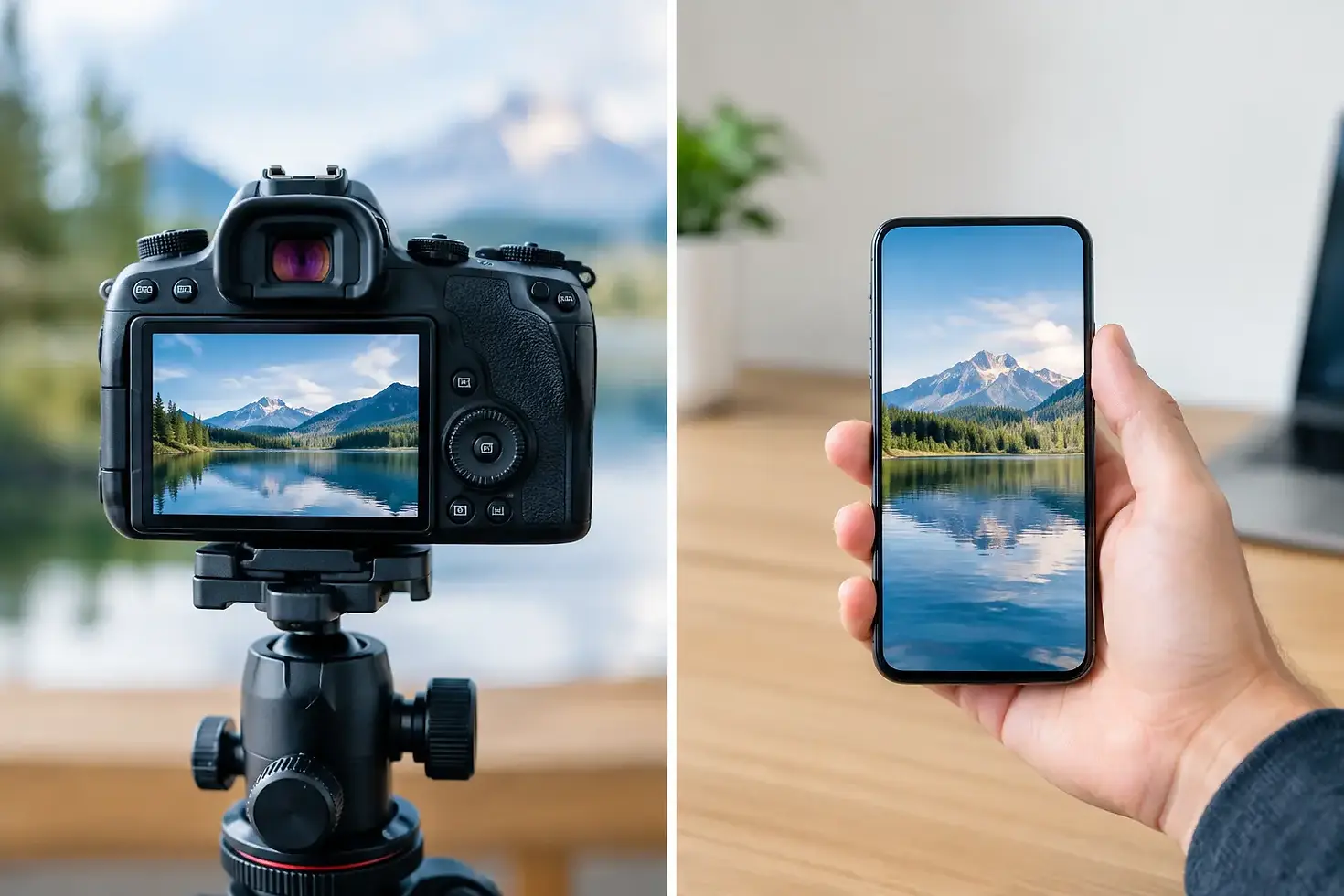
Professional Photos Versus Smartphone Photos
A phone can make a room look bright enough to post, but that is not always the same as making it look worth seeing in person. When comparing professional photos versus smartphone photos, the real difference is rarely the device alone. It is the ability to shape light, choose the right perspective, control visual distractions, and deliver images that make a property, person, or product feel considered from the first glance.
For a real-estate listing or short-term rental, that first glance has real weight. Buyers and guests often decide whether to keep scrolling, save a listing, or request a viewing within seconds. Clean, polished photography gives them a clearer reason to picture themselves in the space.
Professional Photos Versus Smartphone Photos for Property Marketing
Smartphone cameras have improved dramatically. In bright, simple conditions, a current phone can capture a sharp image with attractive color and enough detail for a casual social post. That makes a smartphone useful for quick progress updates, behind-the-scenes content, or a temporary placeholder.
A property listing asks more of an image. Bedrooms may be compact, windows may be much brighter than interior walls, and kitchens often contain reflective surfaces that expose every uneven angle. A professional photographer approaches these challenges as part of the work, not as an accident to fix later.
The goal is not to make a home look unreal. It is to present its best features honestly and beautifully: the flow between rooms, the natural light at the right time of day, the scale of a living area, or the finishes that justify a buyer's interest. Strong images create a feeling of space while remaining faithful to what visitors will find when they arrive.
Perspective changes perceived space
One of the most visible differences is perspective. Smartphone lenses are often very wide, especially when using a phone's ultra-wide setting. That can be helpful in a tight bathroom or small bedroom, but it can also stretch walls, curve vertical lines, and make furniture appear farther apart than it is.
Professional photography uses carefully selected lenses, camera position, and leveling techniques to keep architecture looking balanced. Vertical lines stay straight. Doorways do not lean. Rooms feel open without appearing distorted. This precision matters because viewers may not describe the issue technically, but they can sense when an image feels off.
A well-composed photo also directs attention with purpose. Rather than photographing every corner from standing height, a photographer identifies the angle that best reveals the room's proportions, light, and connection to the rest of the property. That choice can turn an ordinary living room into an inviting place to gather.
Lighting reveals what a room actually offers
Natural light is one of a property's greatest assets, but it is not always easy to photograph. Point a phone at a window and the exterior may turn into a white rectangle. Expose for the view outside, and the room can become dark, flat, or muddy.
Professionals balance these extremes through intentional exposure, supplemental lighting when needed, and refined post-production. The finished image can show a bright interior and preserve the sense of a sunlit view, without harsh shadows or blown-out highlights competing for attention.
Lighting is also about atmosphere. Warm wood, textured stone, fresh linens, and carefully selected décor all respond differently to light. A polished photograph makes those materials feel dimensional and inviting. A quick phone image may record them, but it often misses the depth that gives a space its character.
What Smartphone Photos Do Well
Smartphone photography should not be dismissed. It is immediate, convenient, and always available. For everyday moments, a phone is often the best camera because it is the one already in hand.
For agents, hosts, and business owners, smartphones can be useful between professional shoots. Use them to document a renovation, share a new staging detail, post a timely story, or capture a simple update for past clients. They are also practical when speed matters more than a finished marketing asset.
Phones now apply significant automated processing as well. They brighten shadows, boost color, sharpen edges, and combine multiple exposures to create a more balanced image. In some situations, that processing produces an appealing result with no extra effort.
The trade-off is consistency and control. Automatic processing does not understand which details are central to a listing, how a room should feel, or whether a color is accurate. It may over-brighten a window, shift wall tones, soften texture, or make a scene look more artificial than intended. A professional workflow is built around visual judgment, not a default setting.
The Difference Editing Makes
The capture is only part of the final image. Professional finishing is where small visual distractions are corrected and a complete collection begins to feel cohesive.
Editing can refine exposure, straighten lines, correct color casts, recover detail, and ensure that every room belongs to the same visual story. This is especially valuable in homes with mixed lighting, where daylight from windows meets warm bulbs, cool recessed lighting, or shadows from neighboring buildings.
Thoughtful retouching should not misrepresent a property. It should remove the visual noise that prevents a buyer or guest from seeing it clearly. The aim is aesthetic refinement, not false expectation. A home should feel clean, bright, and carefully presented because the photography has respected what is already there.
Consistency matters just as much for commercial work and professional portraits. If one image is overly warm, the next is dark, and another is heavily filtered, a business profile or listing gallery can feel less organized. A professionally edited set creates confidence before a word of description is read.
When a Professional Shoot Is Worth It
Not every photograph needs a production-level approach. A spontaneous pet photo, a family barbecue, or a quick update from a job site does not need the same preparation as a property entering a competitive market.
Professional photography is most valuable when images are expected to create action. That includes homes for sale, rental listings, Airbnb properties, new builds, hospitality spaces, professional profiles, brand campaigns, and moments you want preserved with real care.
For a property, the investment often reaches beyond the listing itself. Finished images can be used across marketing materials, social media, brochures, agent presentations, and future rental promotion. For a business owner or professional, a strong portrait can support a website, speaking profile, proposal, and personal brand long after the session ends.
The best time to book is before the property is live, while there is still time to prepare each room. Decluttering surfaces, replacing burned-out bulbs, opening blinds where appropriate, and setting out simple finishing touches all help the photography work harder. A photographer can then focus on angles, light, detail, and a smooth visual flow through the home.
How to Choose the Right Approach
The question is not whether a smartphone is capable. It is whether the image has a job to do.
If you need a fast, informal update, a phone may be exactly right. If you need someone to stop scrolling, understand the value of a space, and feel confident enough to inquire, professional photography gives you more control over that first impression.
For sellers and hosts, the strongest approach is often both: use professional images as the foundation of your marketing, then use your smartphone for timely, personal updates around them. The polished gallery establishes quality. The phone keeps communication active and immediate.
Everywhere Studio approaches each session with that balance in mind. The focus is not simply on taking a technically correct photo, but on creating clean imagery that helps a property feel desirable, a professional feel approachable, or a personal moment feel worth returning to.
A beautiful image does more than show what is there. It gives people a reason to look closer, imagine what comes next, and take the next step with confidence.
Comments